

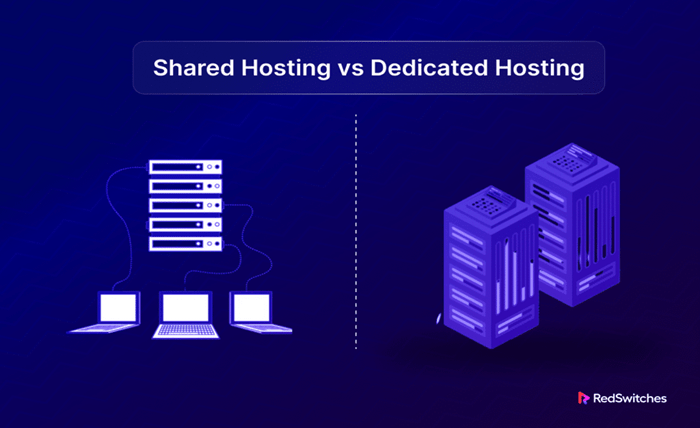
When setting up a website, one of the most important decisions you’ll make is whether to use shared or dedicated hosting. Both options have pros and cons, and the right choice depends on your unique needs and budget. In this post, we’ll explain the key differences between shared and dedicated hosting to help you determine which is best for your website.
What is Shared Hosting?
With shared website hosting, your website shares space on a server with hundreds of other websites. Shared servers divide resources like CPU power, RAM, and bandwidth among all the sites they host. Custom accounts are given a limited allocation of these resources.
Shared hosting is by far the most common and affordable hosting option. It’s a smart choice for personal blogs, small business websites, and new sites without much traffic. The biggest advantage is the low cost—hosting plans often start around $3-10 per month. It also requires minimal technical expertise to set up and maintain.
However, there are some downsides to consider as well. On a shared server, you don’t have full control or customization of the hosting environment. Resource limitations may impact performance as traffic grows. And if other sites on the server have problems, they can negatively affect all sites hosted on that server.
What is Dedicated Hosting?
With dedicated hosting, an entire server is devoted solely to your website. No resources are being shared with other sites. This gives you complete control to customize and configure the server to meet your specific needs.
Dedicated hosting provides abundant disk space, bandwidth, and RAM capabilities. It also enables excellent performance and loading speeds, even on high-traffic sites. Security and stability are also improved since you don’t have to rely on other sites on a shared server.
However, dedicated hosting is significantly more expensive, with plans ranging from $100-$500 per month. And you are responsible for managing the bulk of server administration duties like software updates and security patches. Dedicated hosting requires more technical expertise compared to shared plans.
Choosing Between Shared and Dedicated Hosting
When choosing a hosting option, consider your current website traffic and size, as well as growth projections for the near future.
For blogs, small business sites, and other small-scale websites, shared hosting usually works fine and is the clear budget option. But if your site gets more than 10,000 visits per day or requires specific server customizations, it may be time to make the upgrade to dedicated hosting.
Dedicated hosting is the right choice for companies running large websites, ecommerce stores, or web apps with extensive traffic, complex features, and significant performance demands. It provides the power and resources needed for more ambitious websites to thrive and succeed online.
Conclusion
Deciding between shared hosting and dedicated hosting requires careful evaluation of your website’s unique requirements and growth objectives. While shared hosting works well for smaller, less complex sites, dedicated servers are better equipped to handle heavy traffic loads, custom configurations, and stringent performance demands. The increased control and scalability of dedicated hosting come with a larger price tag, so be sure to factor long-term goals into your decision. With a clear understanding of these key differences, you can choose the ideal hosting approach to provide a fast, reliable online presence. The right hosting environment will empower you to take your website to the next level as your online presence expands.