

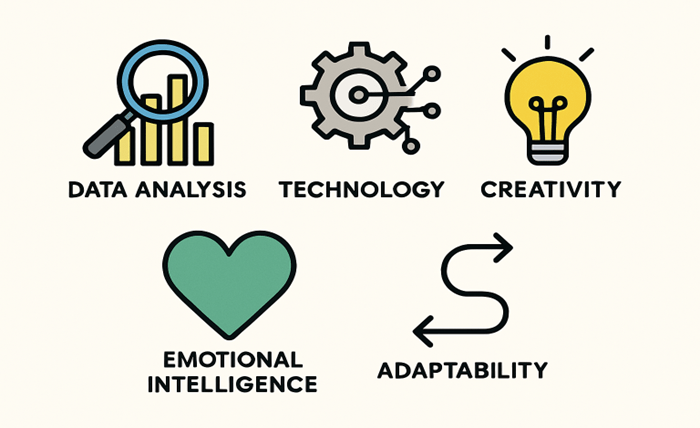
Today’s marketing leaders face rapid change driven by technology, market shifts, and customer expectations. The shift from traditional to digital channels requires expanding, specialized skills. To stay relevant and grow, developing these skills is essential. Whether advancing your career or guiding your team, ongoing growth is key to tactical wins and sustainable innovation. For many, pursuing an MBA online marketing program can offer a structured environment to develop, refine, and apply the future-ready skills modern marketing leaders need for enduring success.
Top marketing leaders differentiate themselves by developing skills beyond traditional strategy and branding, like data science and emotional intelligence. They stay alert to emerging trends, recognizing that these skills increasingly influence success. By focusing on the most important new competencies and honing them, they maintain influence and achieve measurable impact.
Data Analysis Proficiency
In the era of big data, marketing leaders must move beyond surface-level metrics, such as clicks and impressions, to achieve truly transformative results. Modern data analysis involves mining large databases, identifying patterns, and translating findings into strategies. By understanding audience behavior, digital engagement, and market trends in detail, leaders can adjust messaging, optimize spend, and refine content in real time. This precision allows quick pivots, detecting hidden opportunities, and mitigating risks before they escalate, maximizing growth resources. Data analysis also enables proactive responses to shifting consumer preferences, giving marketers an edge. Marketing Week notes 36.9% of marketers see data and analytics as the most significant skills gap, emphasizing the need for enhanced data capabilities.
Technological Savvy
Digital tools like AI, automation, and analytics are transforming marketing. Leaders must master new platforms, including CRM, marketing automation, and content personalization tools. Technical fluency helps leaders manage teams, cut silos, and optimize campaigns. Those who explore and adopt new technology lead their organizations, enabling faster lead qualification, improved targeting, and real-time campaign feedback.
A high degree of technological savvy serves as the bridge between data and creativity, enabling the realization of innovative ideas at scale. As organizations become increasingly dependent on digital infrastructure, having leaders who speak the language of both marketers and technologists is invaluable. Marketing Week reports that 56.9% of marketers identify performance marketing as the main tactical skills gap within their business, highlighting the importance of technological proficiency in modern marketing leadership. ([marketingweek.com](https://www.marketingweek.com/performance-marketing-skills-gap/?utm_source=openai))
Creative Thinking
Innovation is vital in marketing leadership, particularly as consumers are bombarded with numerous brand messages daily. Creative campaigns that generate new ideas, tell compelling stories, and experiment with media help brands stand out. Creative thinking isn’t just for big campaigns but also for incremental improvements and testing hypotheses, leading to long-term gains. It fosters a culture of challenge and innovation. According to Marketing Week’s “Anatomy of a Leader,’ modern marketing leaders focus on sales and commercial success by strengthening their core skills.
Emotional Intelligence
Effective marketing goes beyond algorithms and analytics—it’s about understanding people. Leaders with emotional intelligence build resilient teams and authentic relationships with customers. It includes self-awareness, empathy, communication, and conflict resolution in dynamic teams. Such leaders recognize triggers and motivators, aligning efforts, motivating teams, and fostering trust. Emotional intelligence influences brand perception, engagement, and retention by enabling leaders to listen, respond, and create meaningful experiences. These connections foster loyalty and advocacy, keeping brands relevant during challenging times. Marketing Week notes that soft skills in leadership and communication surpass technical expertise in achieving marketing success, according to Deloitte.
Adaptability
Marketing trends and technologies evolve rapidly, requiring leaders to be adaptable. Adaptability means embracing change, whether by adopting new platforms, pivoting strategies, or quickly developing new skills. Agile leaders monitor the environment for opportunities and threats, adjusting strategies as needed. This flexibility often separates market leaders from those left behind. Adaptable leaders experiment with new methods, respond to consumer trends, and foster a culture of innovation. According to Marketing Week, 64% of marketers believe companies undervalue marketing strategy, with this figure rising to 73% among senior marketers, highlighting the need for leaders who can champion the strategic importance of marketing.
Conclusion
As the marketing landscape continues to evolve, so must its leaders. By honing critical skills in data analysis, technology, creativity, emotional intelligence, and adaptability, modern marketing professionals can chart visionary strategies and foster innovative, resilient teams. Mastering these emerging competencies ensures that brands not only keep pace with the competition but can also set new standards of effectiveness and impact in the digital era.