

The landscape of corporate transparency in Australia is undergoing its most significant transformation in a generation. Joseph Longo, Chair of ASIC, has made it clear that the shift to mandatory climate-related disclosure is not just a trend but a fundamental change to how businesses report their value. For Australian companies, this means sustainability is moving from a voluntary marketing brochure into the core financial reporting package.
Understanding the ASRS Framework
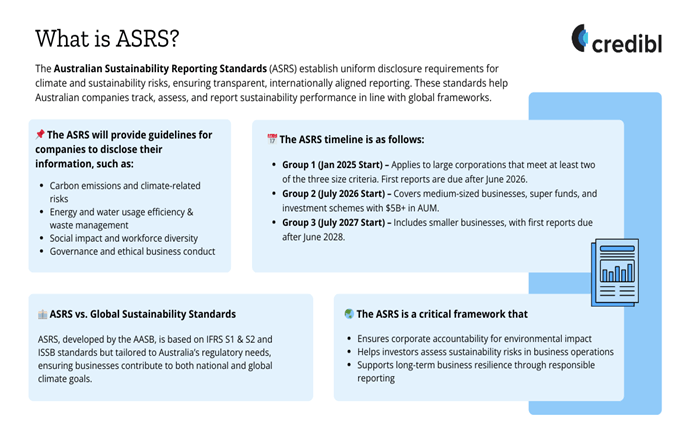
The Australian Sustainability Reporting Standards (ASRS) introduce a mandatory framework for climate-related financial disclosures. These reports must be prepared for the same entity as traditional financial statements, ensuring environmental impact is viewed with the same rigor as fiscal solvency. The framework is built on two primary standards:
- AASB S1: This covers general requirements for sustainability-related financial disclosures that could affect a company’s cash flows.
- AASB S2: This is the mandatory standard specifically focused on climate-related risks and opportunities.
These standards are designed to provide investors and stakeholders with consistent, decision-useful data regarding a company’s resilience in a changing climate.
The Phased Timeline: When Do You Act?
The Australian government is phasing in these requirements based on business size and specific financial triggers. Knowing your group is essential for planning your climate compliance path.
| Group | Commencement Date | Triggers (Must meet 2 of 3) |
| Group 1 | Jan 2025 | $500m+ Revenue, $1b+ Assets, 500+ Employees |
| Group 2 | July 2026 | $200m+ Revenue, $500m+ Assets, 250+ Employees |
| Group 3 | July 2027 | $50m+ Revenue, $25m+ Assets, 100+ Employees |
Even if your business falls below these thresholds, the impact of ASRS is likely already at your door. Large Group 1 firms are required to report on their entire supply chain, meaning they will need data from their smaller partners to meet their own legal obligations. Being ready with this data today makes you a preferred partner for large-scale contracts.
The Four Pillars of Disclosure
Under ASRS, companies must report across four key areas to demonstrate how they manage climate threats.
- Governance: The internal processes, controls, and oversight the board uses to monitor climate-related risks.
- Strategy: How climate threats and opportunities impact the business model and long-term financial planning.
- Risk Management: The specific methods used to identify, assess, and manage environmental threats.
- Metrics and Targets: The concrete data points and emissions numbers used to measure performance over time.
Turning Compliance into Commercial Value
While ASRS is a legal requirement, smart businesses are using it as a tool for long-term growth and competitive advantage.
- Access to Green Finance: Proving your business is climate-resilient makes you a lower-risk prospect for banks. This often leads to better interest rates and access to sustainability-linked loans.
- Decision Certainty: Clean data allows leadership to see exactly where environmental risks hit cash flow, enabling better investment decisions.
- Attracting Talent: High-performing professionals increasingly want to work for organizations that demonstrate a verified commitment to responsible operations.
- Director Protection: With directors now personally liable for the accuracy of these reports, having a robust reporting process is a critical risk management strategy.
Navigating the Transition
The government has provided a three-year “modified liability” period for complex areas like Scope 3 emissions data. This window allows businesses to build their data capabilities and refine their reporting processes without the immediate fear of litigation over unintentional errors.
Moving from awareness to action requires a structured approach. This involves conducting a gap analysis to see where your data currently stands against AASB requirements and establishing a clear roadmap for emissions accounting and transition planning.
For businesses looking to simplify this complexity, expert guidance is often the most efficient path. Partnering with a technical specialist can help ensure your data is robust enough to pass future audits while protecting your reputation.
If you’re ready to secure your business’s future and meet these new standards with confidence, the team at Acumentis provides the technical partnership needed for seamless ASRS Climate Reporting.